Installing Series: This article is Part 1 of HiFocus's Installing Series, a knowledge guide designed to help security planners, hospital administrators, facility managers, and system integrators make better decisions about surveillance placement across different environments.
In India, incidents of violence against doctors and healthcare workers have drawn national attention in recent years. According to the Indian Medical Association, over 75 percent of doctors have faced some form of workplace violence at some point in their career. Source. Meanwhile, hospitals also deal with theft of medical equipment, drug diversion from pharmacies, and liability disputes where recorded footage becomes the only reliable evidence.
A CCTV system in a hospital is not just a security tool. It supports patient care, protects staff, assists in compliance, and reduces liability. But only if the cameras are placed in the right locations.
This article walks through every critical area in a hospital where CCTV cameras should be installed, why each location matters, and what type of camera works best for that environment.
Why Hospital CCTV Placement Demands More Thought Than Other Buildings
Most commercial buildings follow a fairly standard CCTV layout: entrances, parking, corridors, and server rooms. Hospitals are more layered. You have public zones, semi-restricted zones, and strictly restricted zones all within the same building.
Each zone carries its own set of requirements:
Public zones like reception and waiting areas need visible cameras that also deter misconduct.
Clinical areas like ICUs and operation theatres need discreet, tamper-proof cameras that do not compromise patient dignity.
Restricted zones like pharmacies, blood banks, and data centres need cameras that feed directly into access control systems.
Key Areas in a Hospital Where CCTV Cameras Are Essential
1. Main Entrance and Reception
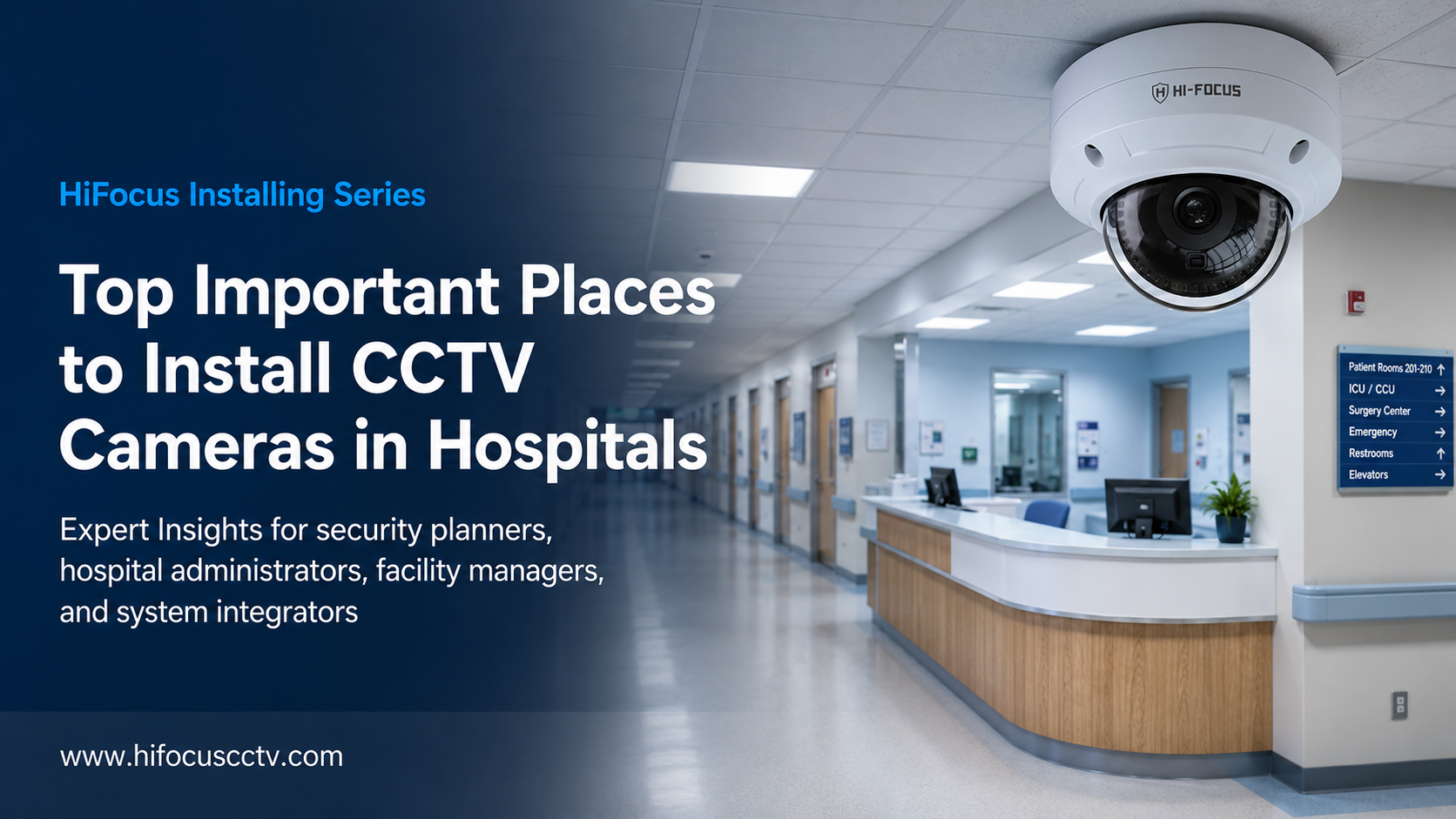
The main entrance is the first and most important checkpoint in any hospital. Every visitor, patient, and delivery passes through here. A camera covering this area captures clear face-level footage of individuals entering and exiting the building, which is essential during any incident investigation.
Reception areas also see a high frequency of disputes, particularly in emergency intake situations. Recorded footage from these areas has repeatedly been used to resolve patient complaints and legal cases.
Camera recommendation: A high-resolution fixed dome camera or a varifocal IP dome camera works well here. For larger reception halls, a network PTZ camera covering the full floor space is a practical option.
2. Emergency Department
The emergency ward is the highest-risk area in any hospital from a security standpoint. Patients arrive in distress, family members are anxious and emotional, and the environment is inherently unpredictable.
Cameras in this area should cover triage counters, waiting zones, and access points to treatment areas. Two-way audio-enabled cameras provide an additional layer where staff can communicate warnings or requests to the control room without leaving their post.
Camera recommendation: Vandal-proof dome cameras with IK10 housing are strongly preferred here, given the possibility of physical altercations near camera positions.
3. Intensive Care Units (ICU) and Critical Care Wards
ICU surveillance is handled carefully because of patient privacy considerations. The goal here is not to monitor patients but to monitor access. Who enters the ICU, at what time, and with what clearance is the primary concern.
Cameras should be positioned to cover entry doors, nursing stations, and equipment storage areas within the ICU. They should not directly face patient beds unless the hospital's privacy policy and consent protocols permit it.
Camera recommendation: Mini dome cameras or corridor-mode IP cameras work well in ICU environments. Corridor mode stretches the field of view along the length of a hallway rather than in a wide angle, which suits narrow clinical passages without capturing unnecessary detail.
4. Operation Theatres
OT surveillance is one of the most sensitive requirements in hospital security. Cameras in operating theatres are primarily used for procedure documentation, training purposes, and resolving post-surgical disputes.
In India, some hospitals are increasingly adopting OT surveillance as a way to demonstrate transparency and protect surgeons from false claims. Footage from an OT must be stored with strict access controls and should only be available to authorized personnel.
Camera recommendation: A 360-degree mini PTZ camera mounted on the ceiling above the surgical field offers full room coverage without creating obstruction. These cameras should support low-light performance since OT lighting can vary by zone.
5. Pharmacy and Drug Storage Areas
Cameras covering pharmacy counters, dispensing areas, and storage vaults provide a direct deterrent and also help in reconciling inventory discrepancies. In combination with access control systems, CCTV here becomes a powerful compliance tool.
Camera recommendation: Fixed IP dome cameras with high-resolution output (5MP or higher) are ideal for pharmacies. Clear face and hand-level footage of dispensing counters is important for audit purposes.
6. Blood Bank and Laboratory
Blood banks and diagnostic labs house biological materials and expensive diagnostic equipment. These areas operate on strict chain-of-custody protocols, and any unauthorized access has serious medical and legal implications.
Camera placement should cover entry and exit points, sample storage areas, and processing counters. This also protects against claims of sample mishandling or cross-contamination.
Camera recommendation: Fixed IP dome cameras with adequate low-light capability since laboratory environments often use controlled lighting.
7. Corridors and Stairwells
Long hospital corridors are frequent sites of incidents, including patient falls, theft, and staff confrontations. Stairwells, particularly in larger hospitals, can become blind spots where incidents go unrecorded.
Corridor-mode cameras are specifically designed for these narrow, elongated spaces. A standard wide-angle camera mounted in a corridor captures a wide but short field of view and misses most of the length. A corridor-mode camera rotates the aspect ratio to capture the full length of the passage.
Camera recommendation: Corridor-mode IP cameras from the HiFocus IP camera range are well suited for hospital passages. For stairwells, a fisheye or 360-degree dome camera ensures complete coverage at a single mounting point.
8. Parking Areas
Hospital parking facilities are among the most undermonitored areas, despite being frequent sites for vehicle theft, patient assaults, and visitor harassment. Hospitals with large parking structures may also have issues with unauthorized vehicles occupying spaces meant for ambulances or emergency access.
Cameras covering parking should have wide dynamic range capability for handling mixed lighting conditions (day, night, and artificial lighting) and should cover all entry and exit lanes as well as pedestrian walkways.
Camera recommendation: Outdoor IR bullet cameras or motorized varifocal network cameras with a wide IR range work effectively in open parking areas.
9. Paediatric Wards and Maternity Units
Child safety protocols in hospitals demand a specific type of surveillance. Paediatric wards and maternity units require cameras to monitor ward entries and exits, primarily to prevent unauthorized removal of newborns or children.
Globally, infant abduction from hospitals, while rare, is a documented risk. Hospitals in India have also reported cases of mistaken identity in newborn handover situations. Camera coverage of ward gates, nurseries, and handover points is important for both security and liability protection.
Camera recommendation: Dome cameras with clear face-level capture at doorways, combined with access logs, create a strong verification trail in these areas.
10. Ambulance Bay and Emergency Entry
The ambulance bay is a critical access point that often operates with minimal staffing during late hours. Cameras here need to cover vehicle entry and exit, patient handover, and any loading or unloading of medical equipment.
Given the outdoor nature of this area, cameras must be weatherproof and capable of handling low-light conditions reliably.
Camera recommendation: Outdoor IP bullet cameras with IR night vision and IP66 weatherproofing. For larger bays, a network PTZ camera can track vehicle and personnel movement across a wide area.
11. Server Rooms and Medical Records Storage
Hospitals generate enormous amounts of sensitive data. Patient records, diagnostic images, and billing data are all housed in server rooms or dedicated record storage areas. Unauthorized access to these spaces represents a serious data breach risk.
Cameras here are primarily for access monitoring. Any entry to these rooms should be logged and visible. Combined with card-based access control, CCTV provides a second layer of verification that digital logs alone cannot offer.
Camera recommendation: Fixed IP dome cameras with tamper alerts. These cameras should feed into a dedicated NVR with restricted viewing access.
12. Staff-Only Zones and Changing Rooms Access Points
Cameras should be installed at the entry and exit points of staff-only areas, not inside changing rooms or private rest areas. Monitoring the doorways of these zones helps track who accessed them and when, without compromising staff privacy.
This is particularly relevant during investigations of theft from staff lockers or unauthorized access to staff zones by patients or visitors.
Recommended HiFocus Cameras for Hospital Installations
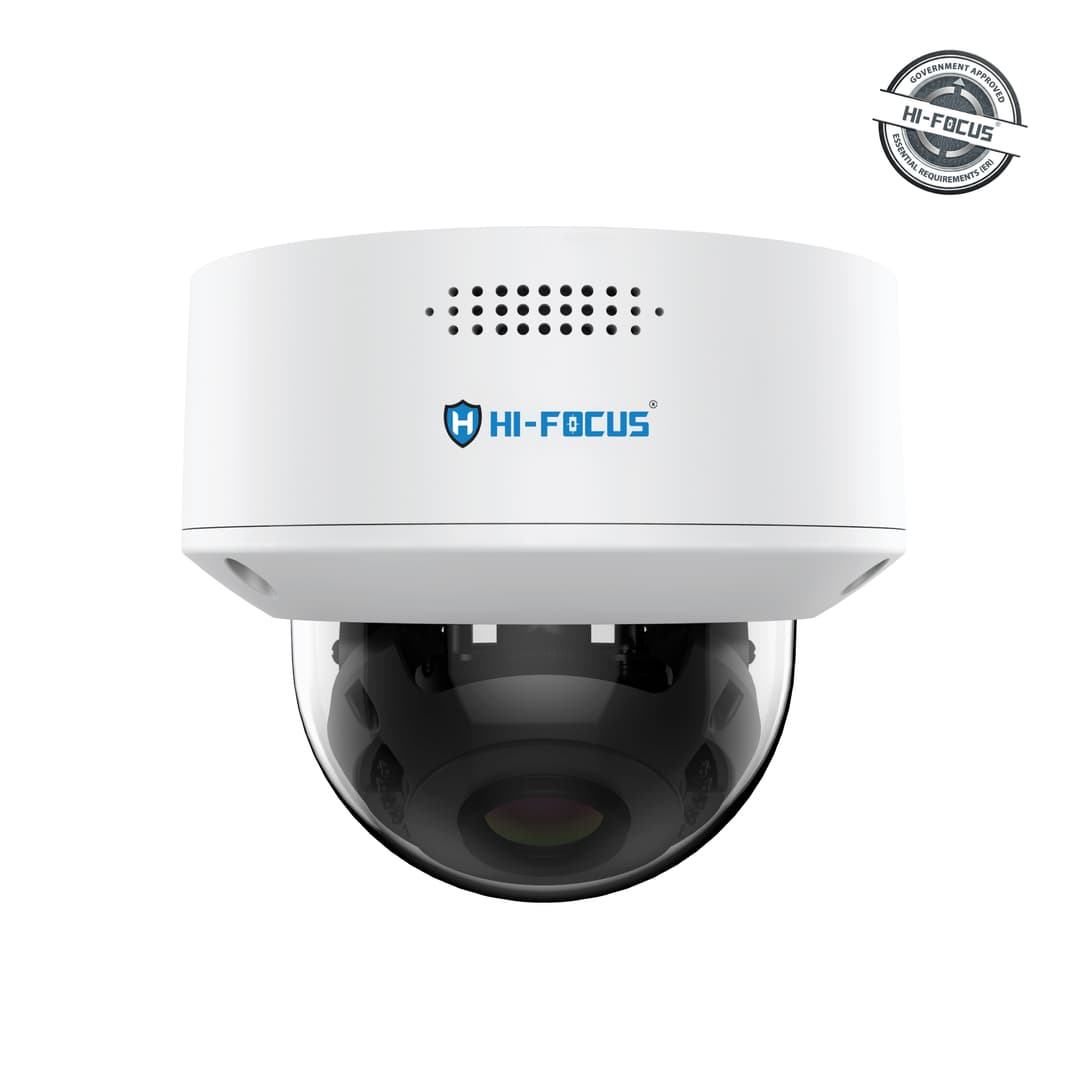
HiFocus offers a range of cameras specifically suited for healthcare environments. The following products are part of the best CCTV cameras for hospitals solution lineup and are designed to meet the demands of clinical, administrative, and outdoor zones.
Product | Best Suited For |
5MP IP Dome Camera (HC-IPC-D4216H-0400) | Reception, ICU entry, corridors, pharmacies |
5MP Dome Motorized Varifocal Network Camera (HC-IPC-DVS5500MVN5) | Large halls, emergency wards, parking entry |
4MP 4x Optical Zoom Network PTZ Camera (HC-IPC-SD0440T-AL) | Ambulance bays, parking, large outdoor areas |
5MP Network PTZ Camera (HC-IPC-SDQA20540-S) | OT overview, large reception, multi-zone coverage |
5MP IP Bullet Camera (HC-IPC-T4215H-0600) | Perimeter, outdoor ambulance bay, parking |
5MP IP Bullet Camera (HC-IPC-T4215H-0400) | Staff entry points, service exits, building perimeter |
You can explore the full specifications of these cameras under the HiFocus IP cameras and Network PTZ cameras category pages.
Privacy and Compliance Considerations for Hospital CCTV in India
Hospital CCTV systems in India must align with several regulatory and ethical considerations. The IT Act and the DPDP Act (Digital Personal Data Protection Act, 2023) place obligations on institutions that collect and store personal data, which includes video footage.
Signage is mandatory: Areas under CCTV surveillance must have visible notices informing patients, visitors, and staff.
Storage and access controls: Footage from sensitive areas like OTs and ICUs must be stored separately with role-based access.
Retention periods: Most healthcare compliance frameworks recommend retaining CCTV footage for 30 to 90 days. For incident-specific footage, longer retention may be required.
No surveillance in private areas: Cameras must never be installed inside restrooms, private consultation areas, or patient treatment spaces without proper consent and legal basis.
Quick Reference: Camera Type by Hospital Zone
Zone | Camera Type | Key Requirement |
Main Entrance / Reception | Fixed dome or varifocal IP dome | Face-level clarity, wide coverage |
Emergency Department | Vandal-proof IK10 dome | Durability, tamper resistance |
ICU / Critical Care Corridors | Corridor-mode IP camera | Long-range narrow coverage |
Operation Theatre | Mini PTZ / 360-degree dome | Low-light, ceiling mount |
Pharmacy / Blood Bank | 5MP fixed IP dome | High resolution, audit-grade clarity |
Corridors / Stairwells | Corridor-mode or fisheye dome | Complete corridor coverage |
Parking / Ambulance Bay | IR bullet / outdoor PTZ | Night vision, wide angle, weatherproof |
Paediatric / Maternity Ward | Fixed dome at entry points | Door-level face capture |
Server Room | Fixed IP dome with tamper alert | Access monitoring, alert-ready |
Planning a CCTV System for Your Hospital?
Designing an effective hospital surveillance system requires more than just selecting cameras. It involves understanding how different zones interact, what footage quality each location demands, and how the overall system connects to your security operations centre.
HiFocus has worked with hospitals, multi-specialty clinics, and healthcare chains across India to design and supply surveillance systems that are compliant, practical, and built for long-term reliability. From the right camera selection to complete network architecture, we help healthcare facilities build systems that actually work when they are needed most.
Explore our dedicated CCTV solutions for hospitals page for a full overview of our healthcare surveillance capabilities, or browse the complete HiFocus product categories to find the right fit for your facility.
To discuss your hospital's specific requirements, get in touch with our team. We are happy to help you plan the right system from the ground up.
Frequently Asked Questions
Where should CCTV cameras be installed in a hospital?
CCTV cameras should be installed at main entrances, reception areas, emergency departments, ICU access points, pharmacies, blood banks, operation theatre access points, parking areas, ambulance bays, corridors, stairwells, paediatric ward entries, and server rooms. Each location serves a specific security or compliance purpose.
Are CCTV cameras allowed in hospital operation theatres in India?
Yes, CCTV cameras can be installed in operation theatres in India, primarily for procedure documentation, training, and dispute resolution. However, the footage must be stored with strict access controls, and patients should be informed as part of the consent process. Hospitals must also comply with data protection regulations, including the DPDP Act, 2023.
What type of CCTV camera is best for hospital corridors?
Corridor-mode IP cameras are the best choice for hospital corridors. They rotate the aspect ratio to cover the full length of a narrow passageway rather than a wide but short field, which is what standard cameras produce.
How long should hospitals store CCTV footage?
Most healthcare compliance guidelines recommend retaining CCTV footage for a minimum of 30 to 90 days. For incidents under investigation, footage should be preserved for as long as required by the legal or administrative process.
Do hospitals need vandal-proof CCTV cameras?
Yes, especially in high-stress zones like emergency departments and public waiting areas. Vandal-proof cameras with IK10 housing resist physical impact and tampering.
What is corridor mode in CCTV cameras?
Corridor mode is a camera feature that rotates the captured image by 90 degrees, changing the aspect ratio from the standard horizontal view to a vertical one.