

A PT camera sweeps a wide area but looks one way at a time. A dual-lens camera keeps two views live at once. For most Indian shops, godowns and homes, that difference decides the purchase. This guide compares dual-lens vs PT cameras on coverage, storage, weather rating and certification, using HiFocus HI-FY specifications.
Key Takeaways
A PT (pan-tilt) camera is one motorised lens: wide coverage, but nothing outside its current view is watched.
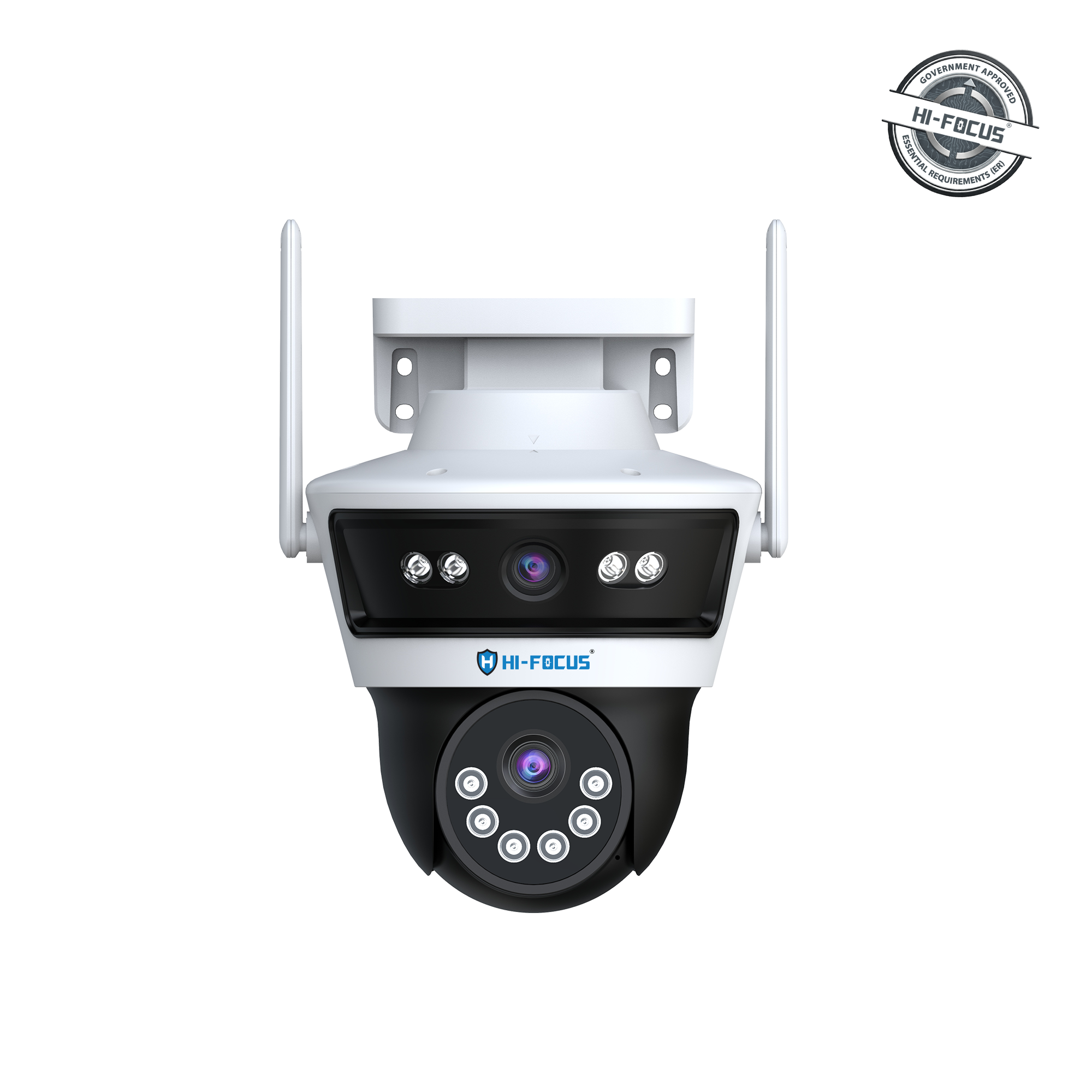
A dual-lens camera pairs two lenses, so a second view keeps recording.
Pick PT for rooms and compact yards, and dual-lens where two zones, such as a frontage and an entrance, both matter.
On a 512GB microSD card, one 2 Mbps stream lasts about 24 days, while two last about 12.
Confirm your exact model is on the BIS register, because BIS ER registration is mandatory for CCTV cameras sold in India.
Dual-lens vs PT cameras: which should you choose?
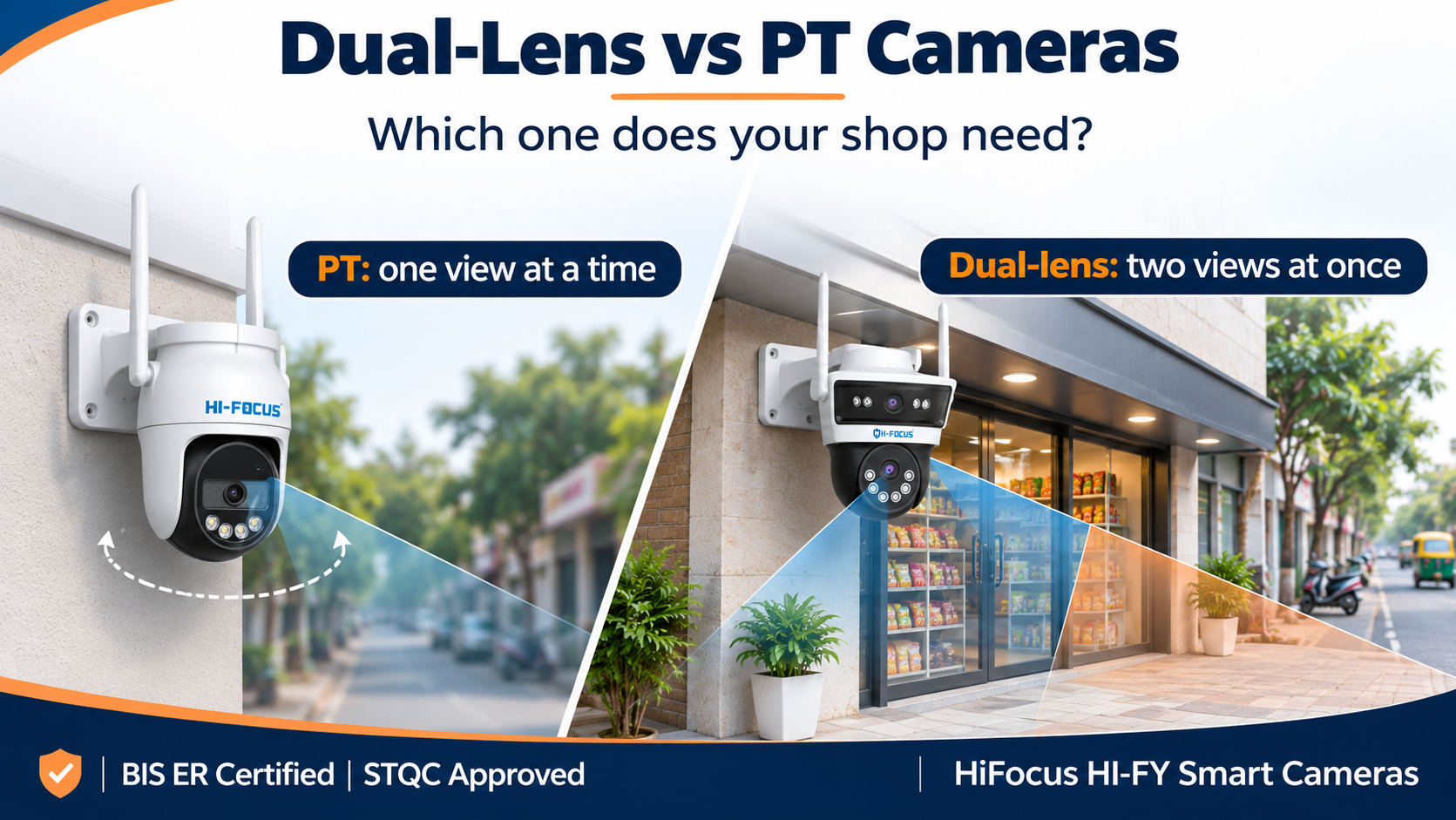
Choose a PT camera to look around one room or yard on demand. Choose a dual-lens camera when you need to record two areas, such as a shop front and a gate, at once. Count the views you cannot afford to miss: one suits PT, two or more suit dual-lens.
What is the difference between a dual-lens camera and a PT camera?
A PT camera is a security camera whose single lens pans and tilts on motors to cover a wider area. A dual-lens camera combines two lenses to capture two views at once.
Do PT cameras have blind spots?
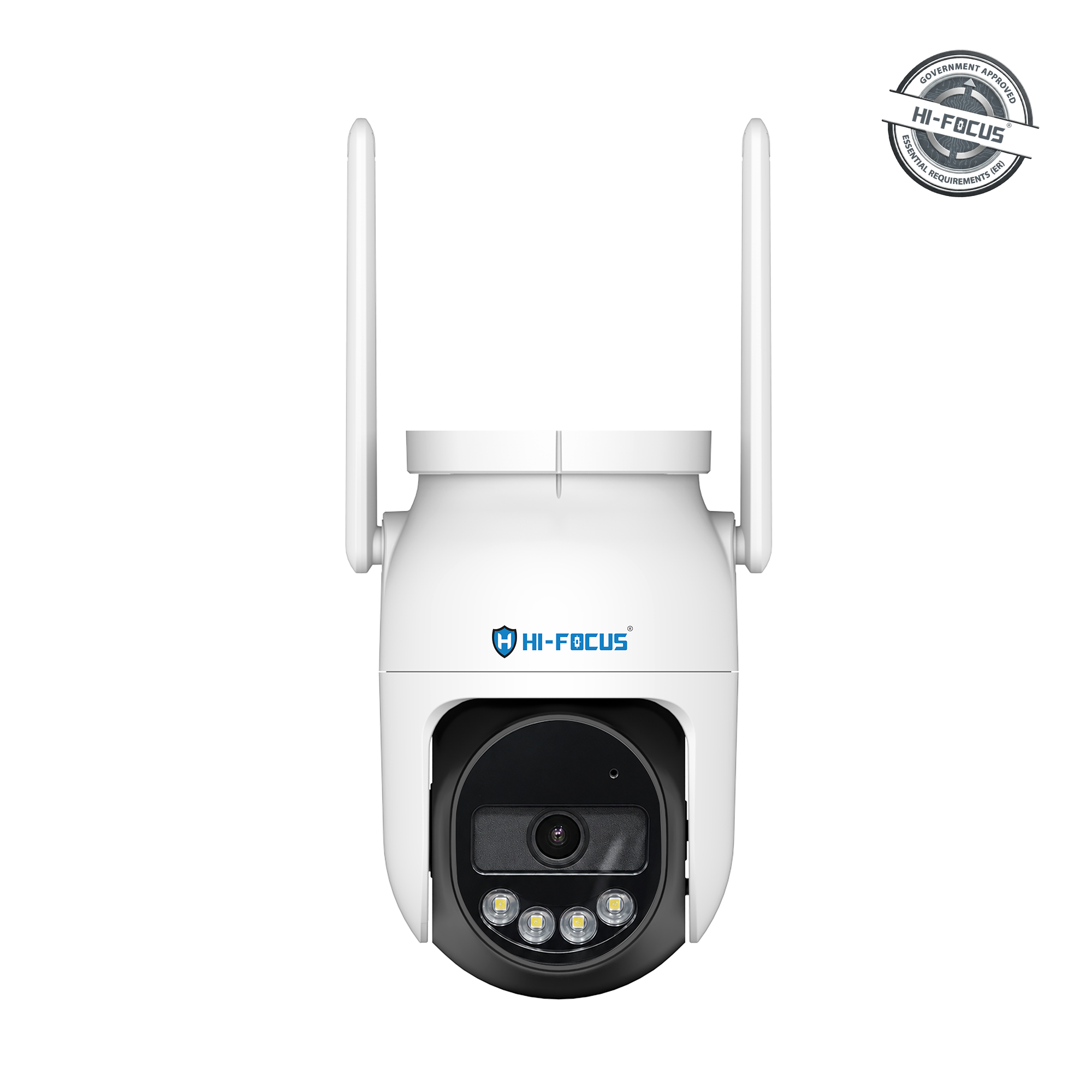
Yes. A single-lens PT camera watches only where it points, so while it follows a subject one way, the other side goes unwatched. The HiFocus HIPC-S5513-DLSW-I3 WiFi PT outdoor camera lists a 350° pan at 30° per second, so one full sweep takes about 12 seconds (350 ÷ 30). A dual-lens camera narrows that gap because its second lens keeps a separate view recording.
Image 2 (place here, HiFocus product image): HiFocus HI-FY 3MP WiFi PT outdoor camera HIPC-S5513-DLSW-I3
Dual-lens vs PT cameras: which suits your space?
Dual-lens suits wide frontages and gates, while PT suits rooms and compact yards. The table compares two models from the HI-FY smart cameras range.
Factor | Dual-lens (HIPC-L5614-DLSW-I4) | PT (HIPC-S5513-DLSW-I3) |
Views recorded | Two | One |
Blind spot while moving | Lower | Yes |
Best for | Frontage plus entrance | Room, shop interior, yard |
Night vision, rating | IR 30 m, IP66 | IR 30 m, IP66 |
IP66 means dust-tight and tested against 100 litres a minute of water jets, a sensible baseline for monsoon installs. For optical zoom, see network PTZ cameras. For wired sites, pair IP cameras with a network video recorder.
How much storage do dual-lens vs PT cameras need?
A dual-lens camera needs about double the storage of a PT camera when both lenses record continuously at the same bitrate. Both models record H.265 or H.264 to a microSD card up to 512GB.
Recording setting | Data per day | 512GB lasts |
One stream, 2 Mbps | 21.6 GB | about 24 days |
Two streams, 2 Mbps each | 43.2 GB | about 12 days |
One stream, 6144 Kbps maximum | 66.4 GB | about 8 days |
Continuous recording, 1 GB as 1 billion bytes, no audio.
H.265 needs about half the bit rate of H.264 for similar quality, so keep it on. For theft-proof footage, see HI-FY cloud storage plans.
How many cameras does a 2,000 sq ft shop need?
A 2,000 sq ft single-floor shop usually needs 4 to 6 camera views: entrance, billing counter, main floor, stock area and frontage. One dual-lens camera can combine frontage and entrance, while a PT camera suits the stock area. Verify each view with the 9-point smart camera checklist.
2.4GHz Wi-Fi travels farther, while 5GHz is faster, and HI-FY cameras support both; our smart WiFi CCTV buyer's guide covers placement. No broadband? Read WiFi vs 4G CCTV cameras. Unsure whether you need one dual-lens or two PT units? Send your floor plan through our contact page and we will suggest a plan.
Are dual-lens and PT cameras legal to buy in India?
Yes, if the exact model is BIS registered against the Essential Requirements for security. MeitY amended the Compulsory Registration Order on 9 April 2024, and enforcement began on 9 April 2025. An industry tracker reports exemptions ended on 1 April 2026.
HiFocus lists HIPC-S5513-DLSW-I3 (granted 5 October 2026) and HIPC-L5614-DLSW-I4 (6 October 2026) on its BIS ER and STQC certification page.
About HiFocus
HiFocus is an STQC-certified, Chennai-based Indian CCTV brand with hands-on experience at business sites. Its BIS ER registration (R-61006165) covers 70+ camera models, from HI-FY smart WiFi cameras to a certified IP camera portfolio. Explore solutions by industry or request a consultation or quote.
Conclusion
Dual-lens vs PT cameras is a coverage question. PT gives flexible viewing of one area, with a blind spot during each move. Dual-lens keeps two zones recorded and uses more storage. Match the camera to your views, do the storage math, and confirm BIS registration. For outdoor spots, compare bullet and dome designs too.
Frequently Asked Questions
Is a dual-lens camera better than a PT camera?
Neither wins in general. Dual-lens suits two zones recorded continuously, while PT suits flexible viewing of one area at lower storage cost.
Can one PT camera replace two fixed cameras?
Only if both areas are close and you accept that it watches one at a time.
Can I use these cameras without an NVR?
Yes. HI-FY cameras record to a microSD card up to 512GB or to the cloud. Add an NVR for central recording across many cameras.
Are PT cameras suitable for outdoor use in India?
Yes, if rated IP66 or higher. The HiFocus outdoor PT model is IP66 and operates from -30°C to 60°C.
How do I check if a CCTV camera is BIS certified?
Search the manufacturer's R-number on the BIS CRS portal, then match your exact model and grant date.