Home security in India has changed significantly. Burglary, package theft, domestic disputes, and unauthorized entry are no longer rare in the news. They happen in gated communities, independent houses, apartments, and rural homes alike. And yet, many Indian households still rely on basic locks and hope.
CCTV cameras for the home are no longer a luxury. In 2026, they are as essential as a smoke alarm. The challenge is knowing what to buy, how many cameras you need, and which features actually matter versus which ones are just marketing noise.
This guide by HiFocus gives you a clear, honest answer to all of that.
Why Home CCTV Is Now a Necessity, Not a Luxury
The numbers tell the story. India ranks among the top countries globally for residential break-ins during working hours, with a significant share going unreported. More importantly, homes with visible CCTV cameras are statistically less likely to be targeted. Criminals weigh risk versus reward, and a camera immediately shifts that calculation.
Beyond theft, home cameras serve multiple practical purposes:
Monitoring children, elderly family members, or domestic staff when you are away
Verifying delivery and visitor activity at the front door
Settling disputes with neighbors or documenting accidents
Keeping an eye on multiple properties remotely through a single app
Top Types of CCTV Cameras Best Suited for Home Use
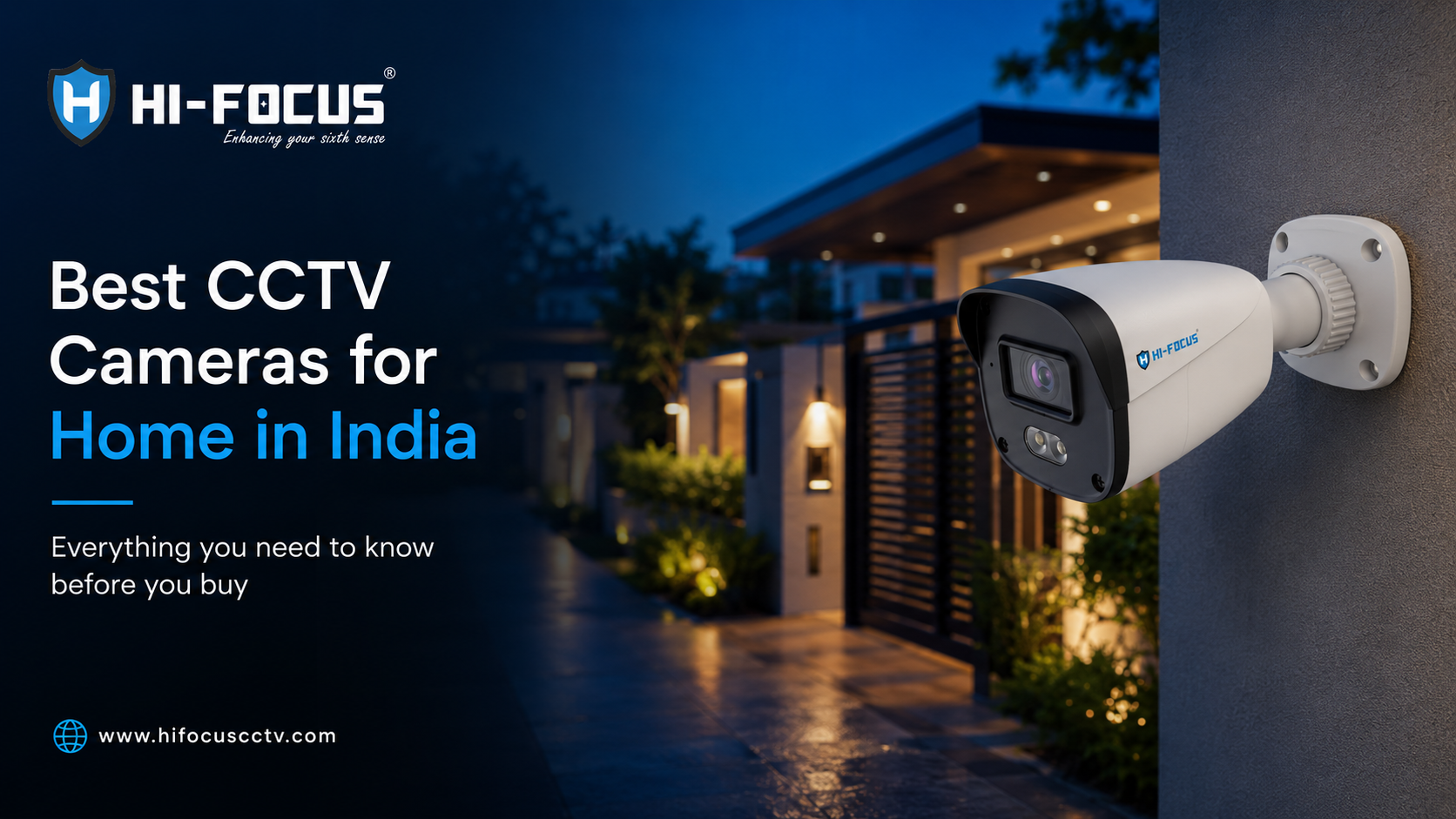
Not all cameras are built for homes. Choosing the wrong type leads to poor coverage, high costs, or unnecessary complexity. Here is what works in a residential setup.
1. Dome Cameras (HD CCTV) - Best for Indoor Home Surveillance
Dome cameras are the most popular choice for indoor home surveillance. Their compact, ceiling-mounted design makes them discreet, tamper-resistant, and capable of wide-angle coverage. They work well in living rooms, hallways, and staircases.
Recommended CCTV Cameras - Top HiFocus Picks
# | Model | Resolution | Key Feature | Best For |
1 | 2MP | Compact dome, reliable indoor IR | Living rooms, hallways, staircases | |
2 | 5MP | High-res dome, sharp zoom-in detail | Larger rooms, reception areas, and lobbies | |
3 | 2MP | Built-in mic + LED color night vision | Entry points where audio monitoring matters |
2. Bullet Cameras (HD CCTV) - Best for Outdoor Home Coverage
Bullet cameras are built for outdoor use. Long, cylindrical, and easy to aim, they are ideal for monitoring driveways, gates, gardens, and entry points. They typically offer a greater range and stronger infrared night vision than dome cameras.
Recommended CCTV Cameras - Top HiFocus Picks
# | Model | Resolution | Key Feature | Best For |
1 | 2MP | Outdoor bullet, standard IR night vision | Gates, driveways, compound walls | |
2 | 5MP | Long-range IR bullet, detailed outdoor coverage | Large compounds, terraces, and parking areas | |
3 | 8MP | Ultra HD outdoor bullet | Villas, farmhouses, and wide open perimeters |
3. PTZ Cameras (NETWORK) - Best for Large Compounds, Villas, and Multi-Storey Homes
PTZ cameras can rotate, tilt, and zoom remotely. If you have a large compound, a multi-storey property, or a farm, PTZ cameras allow one device to cover ground that would otherwise require three. They are more expensive but cost-efficient for larger spaces.
Recommended CCTV Cameras - Top HiFocus Picks
# | Model | Resolution | Key Feature | Best For |
1 | 2MP | 16X optical zoom, PTZ dome | Large compound or open garden coverage | |
2 | 4MP | 4X zoom, full-color night vision | Villa perimeters, hotel entrances | |
3 | 5MP | 40X optical zoom, long-range tracking | Farmhouses, large plots, gated communities |
4. WiFi Smart Cameras - Best for Apartments, Renters, and Quick Setups
For renters, apartment dwellers, or anyone who wants a quick, no-wire setup, WiFi smart cameras are the most practical option. HiFocus offers a range of Smart WiFi CCTV cameras with features like motion detection alerts, two-way audio, and live viewing directly from your phone. Indoor PT WiFi models like the HC-IPC-RG31TL let you rotate the camera remotely to check different areas of a room.
Recommended CCTV Cameras - Top HiFocus Picks
# | Model | Resolution | Key Feature | Best For |
1 | 3MP | WiFi PT indoor, remote pan/tilt via app | Living room, bedroom, baby monitoring | |
2 | 3MP | Bulb-form factor, discreet placement | Discreet indoor monitoring, rental flats | |
3 | 3MP | 4G bullet WiFi, works without broadband | Farmhouses, temporary setups, remote properties |
5. IP Cameras - Best for Scalable, Future-Proof Home Installations
IP cameras transmit footage over a network and offer significantly better image quality and flexibility than traditional analog cameras. They integrate cleanly with NVRs and are ideal for homes that want a future-proof, scalable system. HiFocus IP cameras include models with STQC certification, making them compliant with Indian government standards.
Recommended CCTV Cameras - Top HiFocus Picks
# | Model | Resolution | Key Feature | Best For |
1 | 2MP | PoE bullet, HIT Technology certified | Scalable wired setups, NVR-connected installs | |
2 | 4MP | IP dome, network-grade indoor coverage | Offices, reception areas in home-office setups | |
3 | 5MP | 5MP PoE bullet, DL series, long IR range | Outdoor perimeter on PoE NVR systems |
Top 6 Key Features to Look for Before You Buy
1. Resolution: 2MP is the Practical Baseline
For most Indian homes, 2MP (Full HD 1080p) is sufficient to identify faces, read number plates, and capture incidents clearly. If you have a large outdoor area or want more forensic detail, 4MP or 5MP cameras provide noticeably better zoom-in quality. Anything below 1MP should be avoided entirely.
2. Night Vision Range
India has a significant variation in outdoor lighting. A camera that looks great during the day but goes grainy at night is essentially useless for the hours when intrusions are most likely. Look for cameras with infrared night vision of at least 20 to 30 meters for outdoor use, and 10 meters for indoor coverage.
3. Storage: Local vs Cloud
Most home CCTV systems in India use a DVR or NVR for local storage with an HDD. This is cost-effective and keeps footage private. Cloud storage adds remote backup but involves recurring subscription costs. A hybrid approach, where critical cameras back up to the cloud while others store locally, is the most practical for homeowners.
4. Mobile Access and App Support
In 2026, any camera worth buying should support live viewing on Android and iOS. Real-time motion alerts, two-way audio, and phone playback are standard expectations, not premium features.
5. Weatherproofing (IP Rating)
Outdoor cameras must carry an IP66 or higher rating to handle rain, dust, and humidity, especially relevant for homes in Chennai, Mumbai, Kerala, and other high-rainfall zones. Installing an indoor camera outdoors is a common and costly mistake.
6. Cybersecurity in IP-Based Systems
This is an area most buyers overlook. When your camera connects to a network, it becomes a potential point of cyber intrusion. HiFocus addresses this directly through HIT Technology (HIFOCUS Integrated Trust), a multi-layered cybersecurity framework built into their IP cameras. Features like secure boot, firmware authentication, and controlled access mechanisms prevent unauthorized access to your camera feed, a genuinely important consideration for home networks.
How Many Cameras Does a Home Actually Need?
This depends on the layout, but here is a practical starting point:
Property Type | Recommended Cameras |
1 BHK / 2 BHK apartment | 2 to 3 (main door, living room, one bedroom) |
3 BHK / 4 BHK apartment | 4 to 6 |
Independent house (single floor) | 4 to 6 (entry, backyard, driveway, interiors) |
Villa / Duplex / Large compound | 8 to 12+ with PTZ for open areas |
Top 5 Installation Tips for Home CCTV in India
Position outdoor cameras at 8 to 10 feet in height for the best angle without being easily tampered with
Ensure cameras face away from direct sunlight to avoid lens glare during mornings and evenings
Place a camera at every entry and exit point before covering any internal area
Avoid pointing cameras at neighboring properties or public roads to stay within privacy norms
Label your NVR with channel numbers during installation to simplify troubleshooting later
CCTV for Home vs Commercial Spaces: Key Differences
If you run a business from home or manage a combined residential and commercial property, you need cameras that handle higher traffic zones, provide greater storage retention (30 days minimum), and offer features like crowd detection or person counting.
HiFocus provides tailored surveillance solutions for retail, education, healthcare, and transportation sectors in addition to residential setups. If your needs go beyond a standard home setup, exploring their complete security solutions is a practical next step. They also have a detailed guide on CCTV for small shops in India if you operate a retail business alongside your home.
About HiFocus and Why Indian Homeowners Are Choosing HiFocus
HiFocus is a Chennai-based brand with over two decades of experience in the Indian surveillance market. Their cameras are designed and tested for Indian conditions, which means they account for voltage fluctuations, high humidity, dust, and the specific lighting challenges of Indian homes and streets.
Their product range covers HD CCTV cameras, IP cameras, and Smart WiFi cameras, with NVRs, DVRs, and network switches rounding out a complete, end-to-end system. STQC certification on their IP cameras confirms compliance with BIS and Indian government procurement standards.
What sets HiFocus apart in 2026 is its emphasis on cybersecurity. Most camera brands treat network security as an afterthought. HiFocus built HIT Technology specifically to address vulnerabilities in IP-based home and commercial surveillance systems, giving buyers genuine confidence that their camera feed stays private.
If you are planning a new installation or upgrading an existing system, HiFocus offers free consultation to help you select the right configuration for your home size, budget, and specific requirements.
Conclusion
Buying a CCTV camera for your home is not complicated once you understand what you actually need. Start with resolution, night vision, and weatherproofing. Decide on wired versus wireless based on your property and installation flexibility. Choose a brand with a track record in India, proper certification, and cybersecurity built in, not bolted on.
Security is not about reacting to incidents. It is about making sure they are less likely to happen, and when they do, you have clear evidence to act on. The right camera system does both.
Frequently Asked Questions
Q: Which type of CCTV camera is best for a home in India?
For most Indian homes, a combination of dome cameras indoors and bullet cameras outdoors is the most practical setup. WiFi smart cameras are a good choice for renters or apartments where cabling is difficult.
Q: How many CCTV cameras does a typical 3 BHK home need?
A 3 BHK apartment typically needs 4 to 6 cameras covering the main door, living areas, and one or two balconies or entry points. An independent house may need 6 to 8 cameras, depending on the compound size.
Q: What resolution is good for home CCTV cameras?
2MP (1080p Full HD) is sufficient for most residential use cases. For outdoor areas requiring license plate recognition or detailed identification, 4MP or higher is recommended.
Q: Can I watch my home CCTV camera on my phone?
Yes. Most modern CCTV systems, including WiFi and IP cameras from HiFocus, support live viewing, playback, and motion alerts on Android and iOS apps.
Q: Are WiFi CCTV cameras safe from hacking?
Network-connected cameras can be vulnerable if they lack proper cybersecurity features. HiFocus addresses this through HIT Technology, which includes secure boot, firmware authentication, and encrypted communication protocols in its IP camera range.
Q: What is the average cost of a 4-camera CCTV system for a home in India?
A basic 4-camera HD CCTV system with DVR and 1TB storage typically costs between Rs. 8,000 and Rs. 20,000, depending on resolution, brand, and installation charges. IP-based systems with NVR cost more but offer better scalability and image quality.
Q: Do I need a professional to install home CCTV cameras?
Wired systems are best installed by a professional to ensure proper cable routing and system configuration. WiFi cameras can typically be self-installed using the manufacturer's app within 15 to 30 minutes.