Walk into any serious security project in India today, and you will find the same conversation happening. Whether it is a hospital procurement team, a factory safety manager, or a school administrator finalizing a surveillance upgrade, the question is no longer whether to move to IP cameras. It is how to do it right.
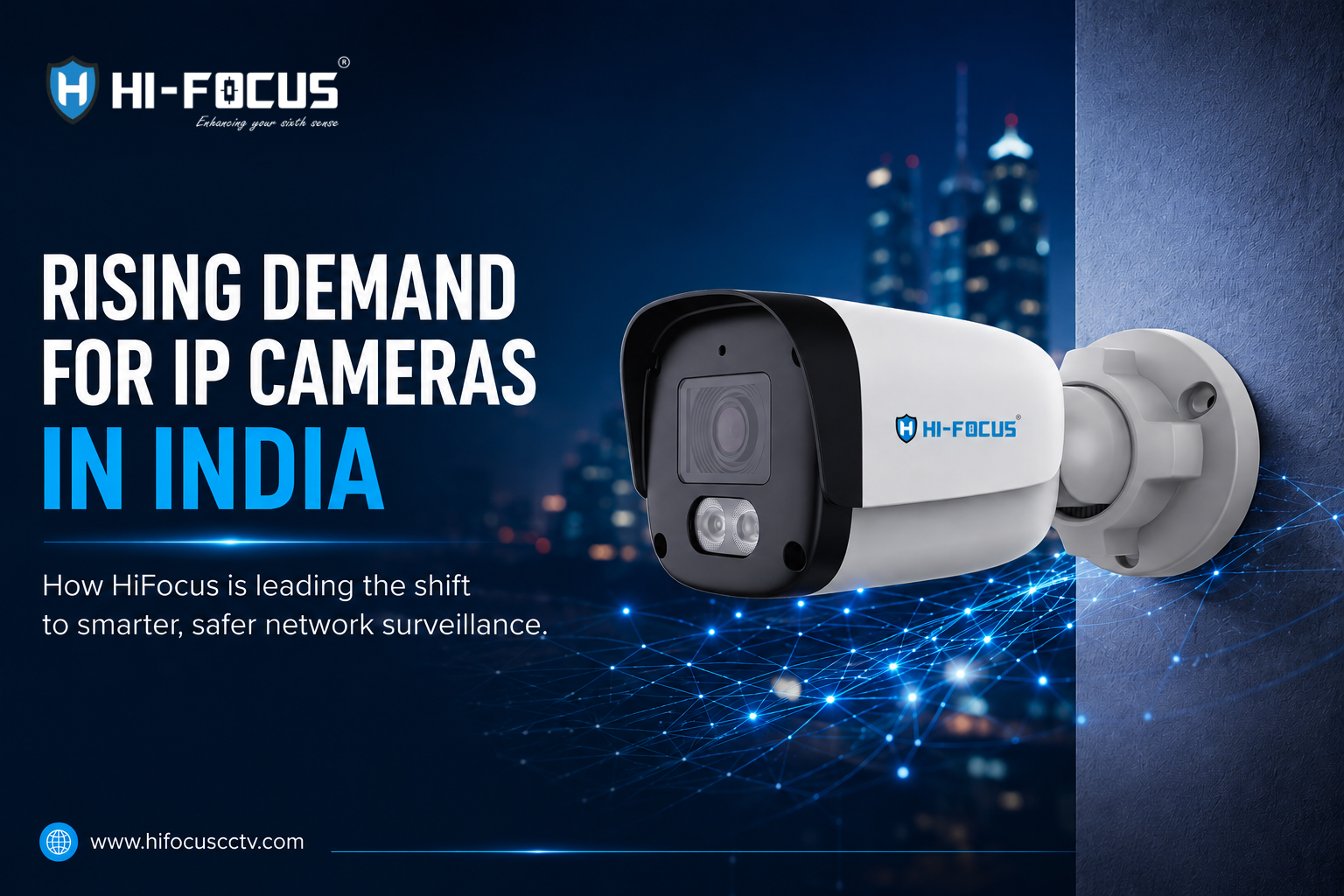
The shift from analog CCTV to network IP cameras has been building for years. In 2026, it is no longer a trend. It is where the Indian surveillance industry has landed, and the demand is only growing.
Why India is Moving to IP Cameras
Image Quality That Actually Holds Up
Even a 2MP IP camera delivers sharper footage than a comparable analog HD camera. At 4MP and 5MP, the difference becomes significant for anything requiring forensic review, compliance documentation, or legal evidence.
Scalability Without the Hassle
An analog system is constrained by the number of DVR ports. Adding cameras often means new cabling, a new recorder, and a new interface to manage. With IP, cameras connect over a standard network. Adding a camera to an existing deployment is straightforward, and managing 50 cameras across three locations from one dashboard is practical rather than aspirational.
Remote Access Changes How Security Works
IP cameras let you monitor a factory in Pune, a warehouse in Ahmedabad, and a site office in Hyderabad from a single screen in Chennai. For businesses managing multiple locations, this eliminates the dependency on local personnel for basic security oversight and enables faster incident response.
Cameras That Do More Than Record
Modern IP cameras run analytics at the edge, directly on the device, without needing a separate server. Motion detection, crowd alerts, perimeter breach notifications, facial recognition, and safety compliance checks like helmet detection all run on the camera itself.
Which Sectors Are Driving the Demand
The adoption is not uniform. Some sectors have moved with urgency.
Government and smart city projects have deployed hundreds of thousands of IP cameras across Indian cities through safe city programs and urban infrastructure mandates. HiFocus participates directly in this space with dedicated solutions for safe city surveillance and traffic management.
Healthcare has seen sharp investment following regulatory requirements for patient safety and incident documentation. Hospitals are replacing aging analog systems with IP networks that can be managed centrally and integrated with access control.
Industrial and manufacturing sites use IP cameras for both security and operational monitoring. Production floor oversight, worker safety compliance, and perimeter coverage are all being managed through network-based systems. HiFocus addresses this through dedicated industrial site surveillance solutions and specialized camera models built for harsh environments.
Logistics and warehousing is one of the fastest-growing verticals. The expansion of e-commerce in India has created enormous demand for warehouse surveillance covering inventory tracking, dock activity, and after-hours security across facilities operating around the clock. HiFocus offers specific IP surveillance solutions for logistics and warehouses built for exactly these conditions.
The Problem IP Cameras Brought With Them
Poorly secured IP cameras have been used as entry points into corporate and government networks. Default passwords left unchanged, unencrypted firmware update pathways, and weak authentication have all been exploited in documented incidents. In India, as government procurement and critical infrastructure increasingly rely on IP surveillance, cybersecurity has become a real procurement criterion.
The problem for buyers is that most cameras do not advertise their security weaknesses. They advertise resolution and IR range. Evaluating firmware-level security requires technical depth that most procurement teams do not have, which means vulnerabilities go unassessed until something goes wrong.
HIT Technology: Cybersecurity Built Into the Camera
HiFocus developed HIT Technology, as a multi-layered cybersecurity architecture embedded at the firmware and hardware level across their IP camera and NVR range.
It works across four areas:
Device Integrity ensures only cryptographically validated, authorized firmware can execute on the device. Tampered or unauthorized code cannot run, removing one of the most exploited attack vectors in IP surveillance.
Secure Communication means all data exchange between cameras, NVRs, and management platforms is authenticated and monitored. Interception and man-in-the-middle attacks on the surveillance network are prevented at the protocol level.
Operational Stability controls configuration changes and limits unauthorized manipulation that could cause system deviations or unpredictable behavior.
Lifecycle Assurance governs the update process. Unverified firmware cannot be installed, which prevents a sophisticated but increasingly common form of surveillance compromise.
For system integrators, this means deploying cameras with security governance built in rather than relying entirely on the customer's network configuration. For enterprise and government buyers, it means HiFocus cameras are aligned with the cybersecurity standards increasingly appearing in Indian surveillance procurement specifications.
STQC Certification: Third-Party Verification That Matters
STQC, the Standardisation Testing and Quality Certification directorate under India's Ministry of Electronics and Information Technology, independently tests electronic products against defined standards for quality, performance, and security.
For IP cameras, STQC certification means the product has been verified by an independent government body, not just self-declared by the manufacturer. This distinction matters significantly in government and PSU procurement, and it is becoming relevant in private sector evaluations where procurement risk is taken seriously.
HiFocus IP cameras carry STQC certification across their range, making them eligible for government procurement, smart city projects, and public sector infrastructure. For private buyers, the certification provides credible, third-party assurance of product quality without relying on the manufacturer's own claims.
The combination of STQC certification and HIT Technology cybersecurity is not common in the Indian market. Most brands offer one or neither. HiFocus offers both across their complete IP camera range.
The HiFocus IP Camera Range: Built for Every Indian Deployment
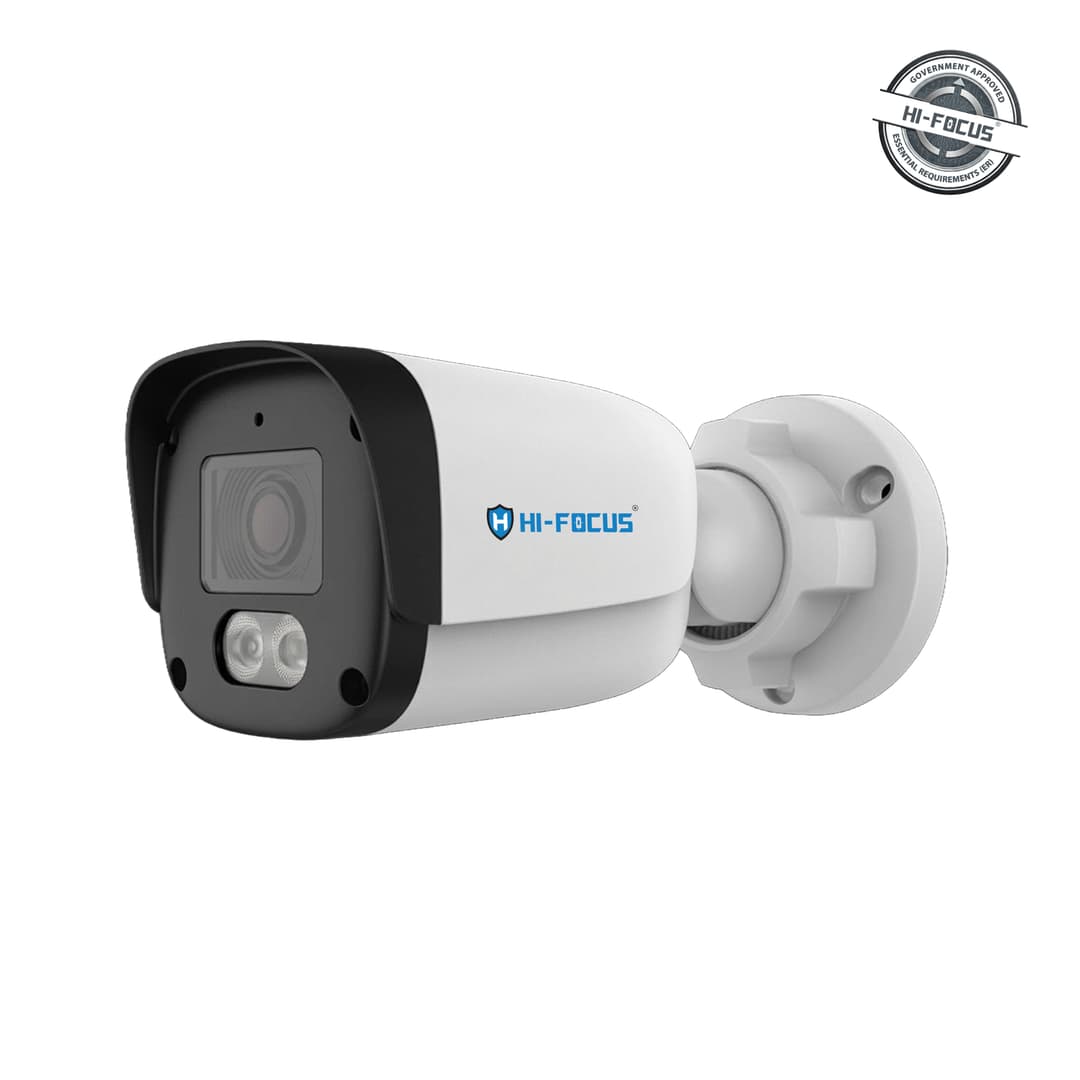
The range covers deployments from a small commercial office to a multi-site enterprise network. Entry-level models like the 2 MP BULLET NETWORK CAMERA provide reliable PoE-based network surveillance at accessible price points. Mid-range models like the 5 MP BULLET NETWORK CAMERA serve outdoor and perimeter use cases with 5MP resolution, dual-light capability, and IP67 weatherproofing.
Specialized variants extend the range further: vandal-resistant MVF bullet cameras with safety analytics for factories, explosion-proof PTZ models for hazardous zones, fisheye cameras for wide-area single-unit coverage, and solar-powered cameras for off-grid deployments.
For buyers and integrators who want to see the full picture before specifying, the HiFocus product range covers IP cameras alongside HD CCTV, WiFi smart cameras, and network PTZ systems.
Conclusion
What has shifted in 2026 is that cybersecurity and certification have moved from technical concerns into mainstream procurement criteria. STQC certification and built-in security frameworks are becoming baseline expectations for serious buyers, not premium additions.
HiFocus has built its IP camera range around both. STQC-certified products, HIT Technology cybersecurity at the firmware level, and a range broad enough to cover every deployment type across India from a single trusted source.
If your organisation is planning an IP surveillance installation or evaluating an upgrade from an existing analog system, HiFocus offers consultations to help you specify the right configuration for your site, budget, and compliance requirements before you commit to a decision.
Frequently Asked Questions
Q: What makes IP cameras better than analog CCTV for Indian deployments?
IP cameras offer higher resolution, network scalability, remote access, and on-camera analytics. They connect over standard network infrastructure, making them easier to expand and manage across multiple sites than traditional analog systems.
Q: What is STQC certification and why does it matter when buying IP cameras in India?
STQC is a government testing body that independently verifies electronic products against Indian quality and security standards. For CCTV cameras, it confirms the product has been tested rather than self-declared compliant, which is increasingly required for government procurement and reduces risk for private buyers.
Q: What is HIT Technology by HiFocus?
HIT Technology, or HIFOCUS Integrated Trust, is a cybersecurity framework built into HiFocus IP cameras and NVRs. It covers secure boot, firmware authentication, encrypted communication, and controlled update governance to prevent hacking, tampering, and unauthorized access at the device level.
Q: Do HiFocus IP cameras integrate with third-party systems?
Yes. All HiFocus IP cameras support ONVIF Profile S and Profile G, enabling compatibility with most third-party NVR and VMS platforms. They also work natively within the HiFocus NVR ecosystem for single-vendor deployments.